Casual Reviews of Movies, Music, and Literature

Tuesday, October 2, 2018

Sinister Cinema: The 70's

Welcome back to Sinister Cinema. For this week's list, we find ourselves in the 1970's - a glorious, gory decade for horror movies. Presented below are what I believe to be the 15 best the genre has to offer, ranked by: how much I like them, how objectively good they are, and how scary they are. Please read and enjoy (at your own peril, of course).


1970's 

15.) Black Christmas (1974): Arguably the very first slasher flick ever made, Black Christmas is vicious, depraved, and incredibly innovative. Bonus points are awarded to lead actresses Olivia Hussey and Margot Kidder, whose genuine performances really elevate this thing beyond its silly, trashy aspirations.

14.) The Omen (1976): While at a glance this devil-child blockbuster seems to share a few too many similarities with The Exorcist (which, one can assume, will appear farther up this list), The Omen is nonetheless impressive. The plot plays out like a film noir mystery, the score is absolutely spine-tingling, and it's all polished over with a glossy Hollywood spit-shine.

13.) Carrie (1976): Based on Stephen King's debut novel, this film adaptation might be even more iconic than its source material. Director Brian De Palma, along with a perfectly cast Sissy Spacek, do an incredible job expressing our protagonist's humility, humiliation, and subsequent retribution.

12.) The Brood (1979): Man oh man, is this a weird movie. Directed by eccentric genius David Cronenberg, it covers a lot of wacky ground, from mutant children to psychoplasmic pregnancy to murder by mallet to, yes, even afterbirth consumption. Wowzers.

11.) The Legend of Hell House (1973): Few haunted house movies have the teeth, the balls, and the heart necessary to truly be considered classic. Thankfully, The Legend of Hell House has it all and then some, living up to its namesake and delivering some of the most unsettling scares of the 70's.

10.) Invasion of the Body Snatchers (1978): While the original film from 1956 is frightening in its own right, this remake has a distinct personality, one that is subversive and seductively scary. It takes its time, but the second half drops like the blade of a guillotine.

9.) Dawn of the Dead (1978): This sequel to 1968's Night of the Living Dead is zombie master George Romero once again delivering a smart, cynical horror statement. Taking aim at American consumerism, our heroes find themselves trapped in a mall infested with the undead, who wander from store to store reliving their favorite pastime - shopping.

8.) Duel (1971): How strange to include this made-for-TV thriller alongside blockbusters and Oscar winners, but with a wet-behind-the-ears Steven Spielberg at the helm for his first full-length directorial effort, how could you go wrong? With a minimalist script and a breakneck pace, this movie is frantic, freaky fun.

7.) Deliverance (1972): Rarely do movies tap into fears so primal, so buried in our subconscious, then have the courage to display them so prominently and with such finesse. With Deliverance, we watch as four friends suffer a gauntlet of atrocity that is practically unfathomable. A note to the uninitiated: prepare to be rocked to your core.

6.) Alien (1979): Of course this classic science-fiction stunner ranks so highly on my list. Here we have director Ridley Scott's magnum opus, a harrowing survival story that unfolds like a space-age slasher flick. The production design, from the ramshackle ship to the bloodthirsty beastie, are disturbingly beautiful. But best of all? The tension and the kills that follow are some of the best ever committed to celluloid.

5.) Don't Look Now (1973): For a movie I'd never even heard of until my early 20's, this often overlooked horror gem is simply fantastic. As beautiful as it is brutal, as cinematic as it is sinister, Don't Look Now is one of the decade's best. The scares roll at you in waves, drowning you beneath unexpected chills and thrills. And the ending? Wow. Worth a second or even a third watch.

4.) Jaws (1975): What else is there to be said about Spielberg's masterpiece of suspense? The plot is lean and mean, the performances from our three lead actors are phenomenal, the tension is thicker than blood, John Williams' score is melodically macabre, and it's all punctuated with scares so intense it'll make you fear open water for, I don't know, the rest of your life? This movie was the first ever summer blockbuster, and did a lot to mainstream B-movie horror tropes. If you're the only person left alive who hasn't seen it, do yourself a favor and rectify this error as soon as you can.

3.) The Texas Chainsaw Massacre (1974): Before seeing this movie, I'd snobbishly dismissed it as hokey, schlocky trash. Surely it was only worthy of drive-ins and midnight screenings, populated by grindhouse enthusiasts with campy sensibilities. God, how completely wrong I was. This deliciously dreadful flick is practically without peer, notable for pitch-perfect work behind the camera (directed by the always-awesome Tobe Hooper) and a keen attention to detail. Cinemassacre's James Rolfe often characterizes the low-budget glory of it all as feeling like a documentary you'd watch in science class. He's absolutely right. There's a palpable reality that's unnerving to even the most hardcore horror hounds. It's awesome.

2.) The Exorcist (1973): My mom likes to tell a story about the time her and her sister went to go see The Exorcist is theaters. They were on a double date, and all my mom can remember is throwing a jacket over her face, covering her ears, and waiting for the whole thing to be over. My wife's experience, though it happened over three decades later, was similar: a basement full of kids watching it on a Friday night, and one of them spent the film's duration rocking back and forth whispering The Lord's Prayer urgently into a pillow. I remember my first viewing was in a well-lit living room at a buddy's house, and while I slogged through it alright at the time (at 14, I had already declared myself a horror aficionado, so my reputation was on the line), I nonetheless had nightmares for months after. Bad nightmares. The kind I still remember to this day. So, yeah...it's pretty incredible.

1.) Halloween (1978): But it all comes down to this, doesn't it? At the end of the day, it doesn't matter how big a movie's budget is, or how enthusiastic the reception from Hollywood elites - all that matters is horror. And with John Carpenter's classic, the horror is black as midnight, tinged with the flickering orange of a jack-o-lantern's candle. This is the ultimate scary movie, one that defined the genre for decades and inspired filmmakers for generations. The premise is iconic. The villain is iconic. The music, the protagonist, the foil, the kills...everything is iconic. And that ending? I've never been more frightened by the static shot of an empty yard, bathed in moonglow, the wind rustling through the trees. This isn't just the best horror movie of the 70's - it might be the best horror movie ever. It uses the backdrop of a typical suburban Halloween, with all its mischief and juvenile fun in tact, to unveil the bloody, brutal heart of the holiday. It is a truly disquieting juxtaposition, one that no other movie has managed to replicate. This should be mandatory October viewing, an annual experience to remind you how awesome Halloween can be.

Monday, September 24, 2018

Sinister Cinema: The 60's

It pretty much goes without saying, but I'll say it anyway: I love horror movies. For the past 5 years I've compiled a "31 Days of Horror" list, which directed readers to watch a different scary movie every day of October. But this year, I'm switching things up. Instead, I'll be presenting weekly lists - the top 15 horror flicks of each decade. We'll start with the 60's and work our way up to the present day. I ranked these movies based on 3 main criteria: how much I like them, how objectively good they are, and, well, how scary they are.

So sit back, turn off the lights, and enjoy. Pay no attention to the shadows pooling in the corners. And that presence you feel looming behind you? The faint sound of heavy breathing from around the corner? Oh, it's nothing.

Trust me.
1960's

15.) Carnival of Souls (1962): This is surreal horror at its simplest and finest. The imagery is creepy, the story is unsettling, and the overall vibe is downright haunting.

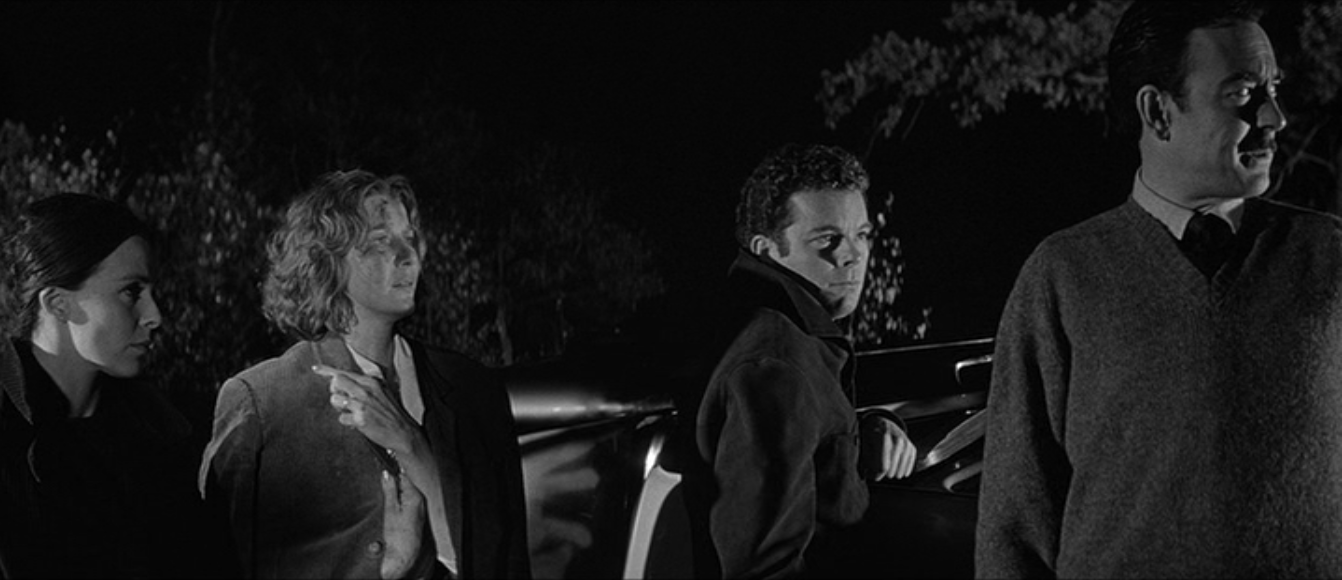
14.) Persona (1966): The less I say about this one, the better. So if you're in the mood for bizarre psychological horror, then this underrated gem by Ingmar Bergman will do you just fine.

13.) Lady in a Cage (1964): I saw this movie as a kid and wow, did it leave a lasting impression. This is a nauseating thriller, one with a melodramatic flair that is fun and frenetic.

12.) At Midnight I'll Take Your Soul (1964): This Brazilian horror flick written, directed, and starring Jose Mojica Marins is arguably the craziest movie of the 60's. It is terrifying, trashy, and totally terrific.

11.) Eyes Without A Face (1960): Few countries do gore quite as well as the French, and here, we have some very early, and very effective, splatter scares. And although the plot is unapologetically bleak, it is very effective.

10.) Black Sabbath (1963): Anthology horror films can be a mixed bag, but when famed Italian director Mario Bava is steering the ship, how could you go wrong? The 3 stories in this movie are each great in their own distinct ways - the first is vicious, the second is macabre, and the third is campfire fun.

9.) The Haunting (1963): For decades, haunted house movies have been content to stick to a certain formula, one ripe with cliches; for that, we can thank The Haunting for setting the gold standard. It is fun and, when viewed in the right atmosphere, genuinely eerie.

8.) The Innocents (1961): If The Haunting is the haunted house genre's gold standard, then The Innocents is its demented counterpart - less gothic, more grotesque. It's a slow burn, but if you can stick it out, the third act (especially the fatal finale) is shocking.

7.) The Birds (1963): This was the very first horror movie I ever saw, and in hindsight, it really did a number on me. The premise is incredibly simple, maybe even a little silly, but Hitchcock's direction is so serious, so sinister, that it's impossible not to get sucked in.

6.) Peeping Tom (1960): Here's the premise: a strange photographer gets his kicks by snapping pictures of murder, so he stabs beautiful women to get the perfect shots. It is twisted, dark, disturbing, and dangerous - all the things a good horror flick should be.

5.) Night of the Living Dead (1968): This infamous independent film propelled writer/director George Romero to the big leagues, and it also solidified "the zombie" as a horror mainstay. And while it hasn't aged all that well (some of the performances are downright cringe-worthy), the guts and grit on display is more than enough to enshrine it in my top 5 of the decade.

4.) What Ever Happened to Baby Jane? (1962): As far as sibling rivalry stories are concerned, few are as downright disturbing as this psychological horror classic starring Bette Davis and Joan Crawford. The enduring legacy of this thing is solidified by the caliber of performance from everyone involved, particularly the stars, the screenwriter, the cinematographer, and the costume designers (who nabbed an Oscar - a rare feat for a genre film).

3.) Repulsion (1965): Roman Polanski is a terrible person, but he has made some incredible films (sorry, but it's true). This simple film, centered on a woman who loses her mind in her New York apartment, is a cagey, claustrophobic nightmare.

2.) Psycho (1960): I know, I know - a lot of you are understandably annoyed that this isn't my number one. Sorry - we'll get to that in a moment. For now, all you need to know is that the heaps of accolades that's been piled on Psycho over the decades are all true. Anthony Perkins should've won an Oscar for his deeply sympathetic performance as Norman Bates, and the score is just as iconic as ever. In every sense of the word, it is a classic.

1.) Rosemary's Baby (1968): ...but if there's one movie responsible for cementing horror as an artistic, effective genre, then Rosemary's Baby has got to be it. It's Roman Polanski again (*annoyed sigh*), but it's here for a reason. This is, irrefutably, one of the scariest movies ever made. At the time, no other popular movie had been so defiantly demented. Cloying neighbors, nefarious doctors, LSD-inspired nightmares, demonic rape, and a satanic child? Come on. This one has got to be the best scary movie of the decade, and is arguably one of the best ever made.

Sunday, February 11, 2018

10 WORST "Best" Movies, Part 2


Submitted for your approval - the sequel to a much-maligned post I wrote a few years back, in which I trashed a handful of classic films: Avatar, Blade Runner, Breakfast at Tiffany's, Gladiator, Heat, The Lady Eve, Solaris, Tron, The Untouchables, and West Side Story. So, take all this with a massive heaping of salt. I mean, honestly - I'm the guy who actually likes such gems as The Godfather Part III, Indiana Jones and the Kingdom of the Crystal Skull, and even Batman v. Superman.

So...yeah. Read and enjoy. Or try to. Sorry in advance on this one.

- An Education (2009): Is this thing even a movie? I mean, it must be. It was critically adored and nominated for three Academy Awards, including Best Picture. Surely that means its an incredible film, one that is well written, brilliantly directed, or at least memorable. Right? Right?

Nope. An Education might just be the blandest film ever made, populated by non-characters treading water through the vanilla conflict of a lukewarm plot. It's a love story, I guess, but without zip or spark of any kind. I kept praying for some awesome Twilight Zone twist to come out of nowhere, to bring this thing out of its purgatory squalor; strangely, I was hoping the male lead was actually Satan in disguise, but nah - nothing that interesting happened. Ever. It's only about 100 minutes long, but feels like you're watching Lawrence of Arabia, Dr. Zhivago, and all three extended editions of The Lord of the Rings back to back. It is the cinematic equivalent of overcooked, flavorless egg noodles - sticky and mushy and not at all what you were craving. Instead, watch Silver Linings Playbook, a romance that is witty and wonderful.

- The Birth of a Nation (1915): Honestly, I shouldn't even have to explain myself on this one. It's a racist, rambling, 3-hour-long "epic" that glorifies the KKK and was considered bigoted even for its time. Who cares that it was innovative? Who cares that it helped legitimize the movie industry? Who cares that it was the first movie to screen inside the White House? This is a terrible film, simple as that, bloated and self-important and, worst of all, in very poor taste. If you're looking for a Civil War epic, watch 12 Years A Slave or Lincoln instead. Both of these should give you the subtleties and insights that the era deserves.

- Braveheart (1995): And then there's Braveheart. (*sigh*) Maybe my expectations were too high. Maybe I'm biased against overlong "historical" epics about the glories of war. Or maybe, just maybe, this movie isn't as good as we all remember. Because trust me - it ain't. Mel Gibson, who I think is actually a pretty talented actor, is nonetheless a ridiculously overrated director. How did this movie win Best Picture in 1995, especially when it was up against Apollo 13 and Babe? It's a mystery. This overstuffed, overblown mess of a movie is painfully dull. It wears its themes on its sleeves, and bashes you over the head with them until you scream "FREEDOM!" and sprint madly away from the television. From its historical inaccuracies to the hammy performances, from the clichés to the corny writing, I'll never understand why this flick is so revered. In the pantheon of over-the-top war cinema, Patton has got to be the best around, so watch that one instead. It's just as long but five times as good.

- Get Out (2017): For the first two acts of Get Out, I'd say it's a good movie - heck, maybe even a great movie. The performances are spectacular, the dialogue is clever, the plot is intriguing, and the overall vibe is eerie and unsettling. Unfortunately, when the third act hits - in all its convoluted, preachy, campy glory - the whole thing goes to, well, a sunken place. The goodwill that was banked from the first 90 minutes of the movie is washed away by a bloodless and befuddling finale. And yeah, I know it's basically heresy to dislike this movie (I've had the arguments and wear the scars to prove it), but I do. As a horror fan, as a horror writer, as a guy who's spent the better part of his life studying Stephen King, Joyce Carol Oates, and John Carpenter, I found this movie to be underwhelming at best and flat-out bad at worst.

Why? Well, at the top of the list is the wildly inconsistent tone. Honestly, this thing is borderline nauseating. I once read a review that described the genre as "horror/comedy/thriller/satire/political commentary." Yikes. Most good horror movies dabble with other genres, particularly comedy. But this? The third act tosses everything into a blender, offering up a totally different mood du jour per scene. Am I supposed to laugh? Cringe? Cry? Cower? When even the film can't decide, why should I? Instead of choosing a unified, coherent direction, each of these different tones is offered to the viewer like a platter of hors d'oeuvres. Choose whichever one suits your fancy, sir. It's on the house. This feels less like some multifaceted artistic statement and more like buckshot. If you throw enough crap at the audience, something is bound to strike them, right?

But it ain't all tone. The brain-swapping plot is about as campy as an early-60's B-movie, something cooked up by William Castle with Vincent Price mugging for the camera. The bloodless kills are sanitized and flaccid. The insinuation that all members of one race are predators and another are all prey is bafflingly broad-stroked. (Unless this is 100% satire, in which case the problem again boils down to tonal inconsistencies.) Writer/director Jordan Peele is a talented artist, no question, and I'm interested to see what he comes up with next. But for Get Out to be universally praised with four Oscar nominations? When so many better horror flicks are casually ignored? Come on. Instead, watch 2014's A Girl Walks Home Alone at Night or 2016's Green Room - both are brutal, biting, and bloody brilliant. And if you're looking for a nuanced account of racism in America? Watch 2017's Detroit. But be careful. It packs a wallop.

- Iron Man 3 (2013): This one's a mixed bag, for sure. Are there aspects I like? Of course. Some of the action sequences are exquisite - watching Tony's California palace get blown to smithereens is pretty neat, and the fireworks finale is loads of fun. Robert Downey, Jr. is again wonderful in the lead role, exploring Tony's humanity and paranoia with an impressive degree of control. And, as we've come to expect in any Iron Man flick, the sarcastic one-liners are to die for.

What don't I like about this movie? Lots. The big "twist" before the third act is laughably cringeworthy. The antagonists have an odd potpourri of powers, chief of which is the ability to breathe fire, which I find hilarious. Whenever Iron Man does something astounding or heroic, it turns out to be a hollow suit that he's somehow controlling from a distance (where's the heroism in that?). And the ending, which I'll not spoil here, seems totally unrelated to the seriousness of the plot. This is, unquestionably, Marvel's worst entry in the MCU, and is a giant misfire overall. It's like Tony's mansion - gorgeous to look at and full of wonderful toys, but it crumbles to pieces oh so easily. Better superhero threequels include Captain America: Civil War, The Dark Knight Rises, and Thor: Ragnarok. Do yourself a favor and watch those instead.

- JFK (1991): Good lord, do I hate this movie. It has one thing - one thing - going for it, and that's a pretty nifty performance by Tommy Lee Jones. Everything else? Just dreadful. I dislike Oliver Stone's style in general, and here he takes it to a whole new level: obfuscating fact with fiction, building mountains out of molehills, lumpy pacing, and a misplaced sense of grandeur...they're all here, and in ubiquitous amounts. These sins sprinkle the 3-hour runtime throughout, and are practically unshakable. But the worst part? Like all movies with Kevin Costner, it's Kevin Costner. Am I the only one who sees it? The. Man. Can't. Act. He has the range of a doorstop and the emotionality of a block of cheese. It's even worse here, when he's surrounded by such tremendous performers (Kevin Bacon, Joe Pesci, Laurie Metcalf, Gary Oldman, Michael Rooker, Sissy Spacek, Jack Lemmon, Walter Matthau, Donald Sutherland, John Candy, Vincent D'Onofrio, John Larroquette, and the afore-mentioned Tommy Lee Jones). I just...I don't get it. But I guess this movie isn't for me. I'd recommend better presidential intrigue movies, namely All the Presidents Men or Frost/Nixon. They both have punch and panache in spades.

- Mulholland Drive (2001): Director David Lynch and I have never been the best of friends, but I've been intermittently smitten with his idiosyncratic style. I rather like Eraserhead if only for its utter absurdity, and movies like The Elephant Man and Blue Velvet are each effective and artistic in their own odd ways. But I'm completely underwhelmed by Mulholland Drive, the film that so many fans and critics seem to think is his best. Like many of the movies on this list, it's entirely too long, but that's hardly the biggest issue. Instead, its Lynch's total obsession with surrealism. The plot is nonexistent, the pacing is almost comatose, and the themes? They're there, I suppose, but only if you're willing to sift through the muck and piece them all together. You see, when I watch a movie, I'm looking for just 3 things: believable characters, an engaging story, and heart. Here, I get none of them. Instead I get art. Oh wow, man. With a painting, you get an immediate visual kick. With music, you feel goosebumps and might sing along. With this? I get bored. Very, very bored. This movie is supposed to be a neo-noir Hollywood mystery, so if that's what you're hankering for, then check out LA Confidential instead. It's actually, you know, entertaining.

- Superman (1978): I really feel bad about disliking this one. For the record, I think Christopher Reeve and Gene Hackman were pretty solid casting choices as the man of steel and Lex Luther. That's...pretty much all I like. Sure, this is an influential movie. Sure, it wowed audiences at the time and launched the idea of the superhero movie. Beyond that, it's pretty forgettable. It's too long, foolishly grandiose, devoid of action, and is a total yawn. Whenever I think about this movie, the images appear in my head as hazy, like a dream sequence in some bad sitcom. And to me, that's how the whole production comes across - soft, saccharine, soulless. As a massive fan of both the genre and the character, I find this hard to get over. This movie just fails to stir any feelings in me - of wonder, of excitement, of nostalgia, of anything. Except boredom and remorse. I hate to say it, but I prefer Man of Steel from 2013, which was a far more visceral and enjoyable blockbuster.

- Titanic (1997): It's bad.

- Vertigo (1958): But if there's one shame I have in all this, it's my strident dislike of Vertigo, the classic mystery from Alfred Hitchcock starring Jimmy Stewart. Much like Blade Runner and Heat, there's an expectation that everyone who sees this movie should fall in love with it. Overall, everyone does. It's often considered to be Hitchcock's best film, and even one of the best of all time. However, it wouldn't be on this list if I agreed with all that. I think it's a well-made movie, one with solid performances and Hitchcock's usual competence, but...

...but it doesn't do anything for me. I've watched this thing three times now, and every time I pop it in, I'm less enchanted than I was before (and that's really saying something). The movie has this sort of droning quality to it, like a song played on the didgeridoo. I admire the skill required to make it, yet I'm unengaged with the finished product. Scenes seem to spiral into one another in big rambling loops, and if the effect is to make the viewer as confused and nauseous as the protagonist, then mission accomplished. But dude! You might be thinking to yourself. That's why this movie is so great! I disagree. When I watch Halloween, I'd rather not feel the knife through my sternum. You get the idea.

No, when all is said and done, I simply don't understand the mountains of adulation piled on this one. Movie snobs tend to fan this thing with palm fronds, but really it's just...fine. About as fine as plenty of other psychological mysteries from that era. There's lots of head but not a lot of heart, which really detracts from its accessibility and the ever-important re-watch factor. Instead, I'd recommend some of Hitchcock's more polished masterpieces - Rear Window, North by Northwest, and good 'ol Psycho. You'll certainly have a more enjoyable experience with any of those. I know I do.

Sunday, January 21, 2018

10 Best Films of 2017

Honorable Mentions: Battle of the Sexes, Dunkirk, It, It Comes At Night, Logan, Okja, Spider-Man: Homecoming, Thor: Ragnarok, War for the Planet of the Apes, Wonder Woman  

10.) The Beguiled: Remember when movies used to just tell stories? Before they became completely obfuscated by boatloads of cash, needless special effects, or insurmountable fan expectations? Yeah. Neither do I. But thankfully, The Beguiled manages to harken back to a simpler era in Hollywood, when a filmmaker's goal was just to spin a yarn and make it a good one. Sofia Coppola is a fabulous director, and here she's crafted an understated masterpiece. Scenes open up in big yawning chasms, so it's easy to tumble in and get lost. I strongly suggest you do.

9.) The Shape of Water: While his last few outings have been forgettable (Crimson Peak and Pacific Rim), here writer/director Guillermo del Toro delivers a strange, intriguing, and utterly unique film. Although the plot is a bit humdrum, everything else is exquisite. The performances are great, especially from Sally Hawkins and Richard Jenkins, both of whom breathe life into otherwise archetypal characters. The themes are equally potent, exploring what it means to be human, asking questions about love and liberty, drawing attention to power dynamics in contemporary America. But the real treat here is the visual style, which del Toro crafts with grace and majesty. Each scene, each shot, is gorgeous.

8.) Baby Driver: While, admittedly, this isn't director Edgar Wright's best outing - I still reserve that spot for 2013's The World's End - Baby Driver is nonetheless exceptional entertainment. It's not quite a comedy, not quite a musical, not quite an action flick, and not quite a crime thriller. Yet it's somehow all of these genres tangled up together, each one vying for your attention and your heart. This film is a magnetic masterpiece, bustling with intriguing characters, wonderful cinematography, and some of the year's best action sequences. As always, I'm incredibly happy with what Edgar Wright delivered, and am dying to see what he'll come up with next.

7.) The Disaster Artist: OH HAI, MARK. Honestly, I shouldn't even have to explain why this movie is great. It tickles your funny bone, churns your stomach, and breaks your heart all at once. It's a hell of a cinematic cocktail - bubbling and frothing with all its disparate components - but man oh man, is it satisfying. The Franco brothers give some of their best performances, both in front of and behind the camera. But be sure to watch The Room beforehand. Trust me. It'll make the whole experience even better.

6.) The Post: This is one of those films that just works exceptionally well across the board - the writing, the acting, the direction, the cinematography, the music, the art direction. Spielberg has become the master of these movies as of late, delivering quality cinema time and again: War Horse, Lincoln, Bridge of Spies, etc. But here, in The Post, the old master has given us something a cut above his usual excellence. The performances are better, particularly by Meryl Streep and Bob Odenkirk. The music is better, again composed by the eternal John Williams. Even the timeliness of its release is synchronized, no doubt intentionally, with current affairs that make the film's themes all the more relevant. The fact that Spielberg made this movie while simultaneously overseeing post-production on Ready Player One makes it even more impressive. I hope he keeps making movies for decades to come.

5.) I, Tonya: It's strange how likable this film is, considering the subject matter. Assault. Domestic violence. An almost awe-inspiring sense of ignorance and stupidity. But damn, if this ain't one heck of a movie anyway. It's funny, tragic, nerve-wracking, and everything you'd want in a movie. It's easy to be startled into laughing, unsure of whether you even should be, and the juxtaposition you'll subsequently experience is uniquely terrific. And that's what this movie is - unique. You're never quite sure if you should be laughing or crying, and the imbalance is beautiful. Another movie this year - Three Billboards Outside Ebbing, Missouri - strikes a similarly bipolar tone; and while that's a good movie, it's nowhere near as emotionally resonant, thematically rich, or stylishly executed as I, Tonya. Like Tonya Harding's triple axel, I'm shocked anyone was able to stick the landing on this one. Thank God I was wrong.

4.) Wind River: Before seeing this film, I thought the title Wind River was merely poetic. A lovely yet haunting name to help sell the movie. And it is, right? It's mysterious yet elegant - a wisp of smoke curling from around a corner, beckoning you forward. But there's more than simple poetry to the title. Wind River is also the name of a sprawling Indian reservation in Wyoming, where the movie takes place. It's also a title which suggests that the very essence of this movie is as natural as the earth itself. Which is also true. This is a story that starts as a murder mystery, but isn't content to live within the comfy preordained confines of the genre. It examines so much more between the title screen and the end credits, particularly Native American culture and grief. Because this isn't simply about the death of a young girl. It's about the death of tens of thousands of young girls. Really, the less I say about it, the better. But I'll leave you with this: The film ends with the image of an Arapaho character sitting outside in the cold. His face is painted blue and white, the two colors intertwining and dividing his hardened expression. It's a moment that's ripe with symbolism, and I can't help but see a lot in these two colors. Native Americans and whites. Heartache and redemption. Good and evil. It's all there, and depending on your interpretation of the story, it's an image that's sure to stick with you. And when a movie can communicate all this with just an image? You know it is of the highest caliber.

3.) Detroit: While writing this review, I must admit that I just finished watching the film - literally just. And I can't...put it into words, exactly. As someone who grew up in Michigan, just forty-five minutes north of the Motor City, I find this film to be...essential. Ingrained. Horrifying. Spectacular. The technical specs are all immaculate. As usual, Kathryn Bigelow's direction is raw, uncompromising, and without peer. The performances are hauntingly authentic, perhaps none more so than John Boyega, who needs an Oscar and more for the humanity and reality he brings to his role.

Nuts and bolts aside, however, this is a stirring film. Period. It's the Schindler's List of the American Civil Rights Movement, a brutally visceral account of a horrid era in America's most iconic rust belt city. Yet beyond the violence - looking past the gunfire and rioting, the screams and tears and gnashing of teeth - the character you need to hone in on is Larry Reed, played to perfection by Algee Smith. In my opinion, he personifies Detroit itself: Initially starry-eyed and optimistic, ready to use his God-given gifts to carry him to fortune. Unfortunately (inevitably?), he suffers immeasurable setbacks - some relatively minor, others downright traumatic; some circumstantial, others systemic. These misfortunes harden him, chilling his marrow and lifting the scales from his eyes. Yet somehow, unbelievably, he finds himself anew - a phoenix reborn through faith and perhaps even a glimmer of that optimism he used to have. It's faded now, buried beneath snow and concrete and blood, but it might just be there. After all, he still lives in Detroit, doesn't he? If that's not optimism, I don't know what is.

To me, Detroit is 2017's ultimate cinematic statement on racism in America. This isn't a broad-stroked horror-comedy mess. Nor is it a veiled parable, almost unrecognizable beneath its many layers of intellectual detachment. No. Detroit is as stunning as it is terrifying, and it deals with its subject matter with a frankness that you won't find anywhere else. If you're brave enough to stomach it, you should watch it. If you're not brave enough? Then you need to.

2.) Star Wars: The Last Jedi: This tenth theatrical installment in the Star Wars saga - yes, the tenth - is an overwhelming achievement in blockbuster filmmaking. Casting off the fun-yet-familiar trappings of 2015's The Force Awakens, here we have a full-fledged space opera extravaganza, one with heart and brains and, thankfully, guts. This movie is daring, probably more so than any tent-pole goliath has been before. Sure, it cannibalizes the saga to a certain degree (The Empire Strikes Back is reappropriated at length), but it's so surprising and bold that it hardly seems to matter.

Most of this boldness comes from writer/director Rian Johnson, the guy responsible for such gems as Brick, Looper, and a handful of phenomenal Breaking Bad episodes. He doesn't just direct this movie; he directs the crap out of it, weaving subplots and character arcs and genre tropes all snugly together. This is unquestionably the most action-packed entry to date, with breathless cosmic dogfights and a lightsaber sequence that is just...wow. But this thing ain't all action. It's also a soulful study on heroism, examining the ambiguity of good and bad, and the tension that simmers in between. In fact, there's a blizzard of gray area here: protagonists fail, antagonists triumph, characters question each other and themselves, the list goes on.

Daisy Ridley and Adam Driver are impeccable as the light side and the dark, straining to understand each other as their shared destinies become hopelessly entangled. Mark Hamill gives the performance of his career as a now-embittered Luke Skywalker, flipping the wise-old-mentor archetype on its head as he reveals himself to be less of a legend and more of a tortured soul. Also fabulous are the supporting players, especially Oscar Isaac and Kelly Marie Tran as Resistance fighters who just want a shot to do something good. And keep your eyes peeled for a fun turn by the always-terrific Benicio del Toro as a slimy codebreaker.

All in all, it's safe to say that The Last Jedi is aggressively good. It's certainly the best installment since 1980's The Empire Strikes Back, and will undoubtedly be remembered as the best space opera flick of the decade. It is transmodern, ardently iconoclastic, but best of all? It's still Star Wars, and it's still fun.

1.) Blade Runner 2049: Few films these days have the courage to unfurl like a novel, letting their threads unspool organically and ponderously. Thank goodness Blade Runner 2049 isn't like most movies. It takes its time, letting the characters explore their world with way more free reign than you might expect. But this is a good thing. Heck, not just good, but great. It imbues the entire film, which clocks in at a whopping 163 minutes, with a sense of grandiose profundity. By the end, it feels less like a movie and more like an experience, one that doesn't just linger, but imprints itself into your cinematic sensibilities.

As someone with an intense disdain for the original Blade Runner from 1982, I was totally surprised and impressed by this sequel. Honestly, I'm not some die hard Blade Runner fanboy who waited with baited breath the release of this film. I thought the trailers looked interesting, and although I find Ridley Scott's original to be tedious, boring, and thoroughly overrated, I decided to see this sequel on a whim. About halfway through my first viewing, a thought occurred to me. It rang in the depths of my psyche like a church bell: Holy crap, this is incredible. Then, later: Holy crap, this might be the best sci-fi flick in years.

And it is. The cinematography and production design are so beautiful that basically any given shot is worthy of being framed and hung in a gallery. Performances range from great to marvelous. The score, a droning and disorienting synth landscape, is distinctive and vivifying. The special effects are must-see, and are utilized in some really clever ways (there's a love scene that is simply unprecedented). 

But really, it's not about the effects. Like all great stories, it's about characters and ideas. Here? Every character is compelling. Concepts of humanity are challenged. Our notions of personhood and the Other are called into question, daring us not only to empathize with a non-human, but to recognize him as well. It opens up a whole realm of personal and philosophical questions. This is the thinker's movie, one aglow with ideas, rendering everything else secondary. It's cerebral science-fiction, made in the glorious tradition of 2001: A Space Odyssey, Silent Running, and most recently, Ex Machina. And yes, it is a peer to these classics. Unquestionably.

Grand. Inventive. Clever. Sensational. These are the words I'd use to describe Blade Runner 2049, my pick for the best movie of 2017. I seriously doubt another movie will surprise me so delightfully and overwhelmingly again in the future.