Casual Reviews of Movies, Music, and Literature

Tuesday, October 1, 2013

31 Days of Horror (Part 2): The Revenge

Yup, now that October is upon us (like a chilled wind in the dark, like goose bumps along your spine), it's time for my second "31 Days of Horror" list. Just like last year, I'm presenting 31 of the best scary movies out there. For the sake of convenience, this list will be in chronological order.

...if you happened to miss my "31 Days of Horror" blog from last year, I urge you to take a look. Combined, these two lists create quite the terrifying canon...

- Frankenstein (1910)

- Dracula (1931)

- M (1931)

- Freaks (1932)

- Bride of Frankenstein (1935)

- The Wolf Man (1941) 

- The Night of the Hunter (1955)

- Eyes Without A Face (1960)

- Carnival of Souls (1962)


- The Birds (1963)

- Lady in a Cage (1964)

- The Omen (1976)

- Carrie (1976)

- Eraserhead (1977)

- Dawn of the Dead (1978)

- The Fog (1980)

- The Evil Dead (1981)

- Creepshow (1982)

- A Nightmare on Elm Street (1984)

- The Monster Squad (1987)

- Misery (1990)

- Jurassic Park (1993)

- Se7en (1995)

- The Last Broadcast (1998)

- The Others (2001)

- 28 Days Later (2002)

- Saw (2004)

- The Descent (2005) 

- Let the Right One In (2008)

- Black Swan (2010)

- The Cabin in the Woods (2012)

Monday, September 2, 2013

The "Three Flavours Cornetto" Trilogy

Ladies and gentlemen, what we have here is something very, very special. It isn't often that a movie series gets it 100% perfect, scores a perfect 10, from its fist installment to its last. Plenty of film sagas have come close, but there's always something a tad awry in the overall execution: an actor gets replaced by another, a storyline gets bungled, one of the sequels is sub-par, and so on and so forth. Needless to say, there's usually something that doesn't quite work.

But not here. And that's what's so spectacular. In the "Three Flavours Cornetto" trilogy, we have a cinematic hat trick. Starting with 2004's Shaun of the Dead, to Hot Fuzz in 2007, and finally The World's End which opened in American theaters two weeks ago, we have been given a slice of the sublime. These are three supremely satisfying movies, which perfectly balance humor, wit, heart, and everything in between. They are classified as a "loose" trilogy, meaning the installments have no interlocking plots and characters, but share close similarities in other ways (they are built by the same production team, inhabited by the same actors, specific jokes and scenes make appearances in each film, and yes, who can forget Frost's cornetto leaving its grand impression on each one). However, this is the tightest "loose" trilogy I've ever seen. It's a kaleidoscope of interconnecting jokes, references, and archetypes. They fit snugly alongside one another, resonating like a major chord on a grand piano. There is no dissonance, no bum key - just pure harmony. Let me tell you about each one.

- Shaun of the Dead (2004): At a glance, the premise is simple, juvenile, uninspired. A comedy with zombies? How original. Yet it's this underestimation that grants the film (all three of these films, actually) it's first of many pleasant surprises. The writing on display here is superb. Turns of phrases, humorous subtleties, plot twists: they all have their place in Shaun of the Dead. The performances are equally marvelous, particularly Simon Pegg, who steals the show in the film's title role. He's a lovable loser - the guy you always fear you'll become: apathetic, unmotivated, stuck in that same boring 9-to-5 job you've had since high school. It's a touching performance, realistic and hilarious.

The movie's true triumph, however, is the skillful direction of Edgar Wright (who directs all of these films, actually). Scenes depicting mundane human behavior drift by, infusing them with a zombie-like quality. Visual gags and careful comic timing take center stage. Every scene hums with an efficient poetry. This is truly a film for the eyes, spattered with red and basking in saturated colors. You'll laugh, you'll cringe, you'll cry. What more can you ask for?

- Hot Fuzz (2007): Without batting an eye, with nary a thought otherwise, Hot Fuzz is my absolute favorite buddy-cop movie. Period. After just the first ten minutes, my stomach ached with laughter. Really. This might even be my personal favorite entry in the trilogy, but it's hard to say. I know that I quote this one the most ("...he's not Judge Judy and executioner!"), that I find myself constantly ready to pop it in the DVD player and give it another watch, that I placed it on my "125 Best Films of All-Time" list and will defend it against naysayers high and low...

Yup. This is my favorite.

...it's just...so...good. The dialogue is hysterical, the mystery is intriguing, the action is fantastic, and the acting is terrific. A frothy chemistry bubbles about the characters, notably between our brazen hero Nicholas Angel (Simon Pegg) and bumbling "policeman-officer" Danny Butterman (Nick Frost). These characters are portrayed with equal parts cynicism and conviction, which allows the parody and the drama to remain in tact. This truly is a great movie. Silly yet sad, hilarious and heartfelt, you'll laugh until you cry (and sometimes even the other way around). It's awesome.  

- The World's End (2013): Finally, fittingly, for our grand conclusion, is The World's End. Fans had to wait quite a while for this one (Wright took a short reprieve after Hot Fuzz in order to direct the equally impressive Scott Pilgrim vs. The World), and expectations were high. Thankfully, this final installment delivers. It's funny, unique, introspective, tinged with melancholia - it fits in all the classic traits this trilogy has to offer and more.

In addition to the acting (Pegg and Frost are spectacular, as always), the movie's best attribute is its visual artistry. The sets are all lovingly constructed, with meticulous care and mindful design. The small-town imagery is quaint and three-dimensional. Perhaps most stunning of all are the "blanks," those villainous hordes jogging down moonlit streets, eyes wide and mouths agape, an unearthly blue light screaming out from within. These images aren't soon forgotten. They stick with you long after the end credits are over and the theater has faded in your rear-view mirror.

...just like this entire trilogy, actually. These three films leave a mark. They make you laugh as well as lament, cringe as well as cry. They are three of the best movies of the last twenty years, and have accomplished this not by conforming to rigid Hollywood archetypes but by transcending them - parodying the very films they celebrate, deepening our cultural consciousness by adding weight and emotion to mundane cinematic conventions.

Entertaining, intellectual, and artistic. The Holy Trinity of film. A Holy Trinity of films.

Fantastic.         

Sunday, August 11, 2013

20 Books that Changed Me - Part I

I may be an avid writer (obviously), but I'm also a voracious reader. I was an English major in college, where I took a wide range of courses on the subject. Some of my favorites included "Literary Analysis," "Contemporary American Prose," "Shakespeare Studies," and "Literary and Cultural Theory." Yet I've always loved literature, so I'm here today to talk about the 20 books that changed me. These are the books that left a mark, that had an impact on my life. They aren't necessarily my favorite books, nor should they be considered "the best" in any way. This post is simply one of admiration and recognition. This literature enraptured and sustained me.

Therefore, the following list is broken down into four segments: Elementary School (ages 5-10), Middle School (ages 10-13), High School (ages 13-17), and College (ages 17-22). I will include five books for each of these sections. "Part I" will be the first ten books, from elementary and middle school.

Elementary School (ages 5-10)
- The Essential Calvin and Hobbes by Bill Watterson: Through sarcastic, egocentric Calvin and succinct, lovable Hobbes, I learned how to enjoy literature. I was given this book when I was five years old, and haven't put it down since. As time has passed I've come to value the humor, concepts, and artistry of the latter Calvin and Hobbes comics more than the earlier ones, but The Essential is nonetheless a great book. Full of funny faces and terrific one-liners, it never fails to make me smile.   
- George's Marvelous Medicine by Roald Dahl: It's wacky, it's disturbing, it's a book by Roald Dahl. I don't think I can sum it up any better than that. I will say that I read this book in the third grade, and loved it so much the teacher asked me to read it aloud to the entire class. It took a couple weeks to get through, but I got to sit in the "Teacher's Chair" (oooooooooohhhh, I know) and read it to the class every day. I love this book and the great memories associated with it. It's a strange book, but a terrific one nonetheless.

- Animorphs series by K.A. Applegate: My buddy Brandon and I read these books together throughout elementary school. Every time we finished a new entry in the 62 part series (WOW, that's a lot) we'd stroll around the playground, discussing all the new characters and plots. After all, that was some pretty heavy science fiction we were dealing with. An invasion of evil alien slugs who control human brains? Superhero teens who can morph into animals by absorbing DNA through their hands? Dying alien princes and glowing cubes? This series showed me distant galaxies, time travel, and occasionally swirled into alternate dimensions. These books are immensely entertaining, and started my love affair with sci-fi.  

- Hatchet by Gary Paulsen: The ultimate "boy book," Hatchet follows a kid named Brian after he is the lone survivor of a plane crash in the Canadian wilderness. This book was read to me by my fifth grade teacher, and I can still vividly recall all the tense moments, all the taut action. It amped up my adrenaline and fueled my imagination. Plenty of sequels followed, and while they are all quite decent (especially Brian's Winter and The River), the original is pure, unadulterated awesomeness. What a great book.
- The True Confessions of Charlotte Doyle by Avi: A swashbuckling tale of mutiny and murder, of high seas and high stakes. This was another book read aloud by my fifth grade teacher (as you can tell, she's easily one of my favorites), and she did a superb job acting it out: namely, the British accents, which ranged from cockney to RP. I've read this novel a few times, both as an adolescent and an adult, and it's still a vastly enjoyable read. An awesome cast of characters (including one of the best villains in children's literature...the best), a fabulous plot, and full of lovely little historical nuggets. What more can you ask for? Pick it up and be swept away.


Middle School (ages 10-13)
- The Giver by Lois Lowry: This was the first serious work of science fiction I'd ever read. When I first tackled it in the 6th grade, I hadn't a clue what I was truly dealing with. The themes of emotional and psychological repression escaped me, and the subtle moments of existential horror went way over my head. Instead, the book felt like a grand experiment. How long could the author hide what was truly going on? How creatively could she masquerade the inevitable? The Giver illustrates the beauty of writing and all its interlocking parts, from pacing to characterization to prose. As an eleven-year-old, it showed me how important creativity (and freedom) really is. It is a novel of the highest order.
- The Prehistory of The Far Side by Gary Larson: Hysterical, bizarre, and incredibly personal, this book is still one of my all-time favorites. Cartoonist Gary Larson takes his enormously successful comic strip The Far Side and presents it like a museum exhibit - starting with its humble origins, discussing its influence and design, and ending with a selection of his personal favorite strips. For me, this book was a teaching tool. It showed me the ins and outs of publication, with all the esoteric and obscure references still intact. Most importantly, though, this is just a really, really funny book. It helped shape my sense of humor, and therefore has helped mold who I am today.
- Monster by Walter Dean Meyers: As a twelve-year-old, I had no idea a novel could be anything more than just a novel. Thanks to Monster, I learned that literature could be tinkered with, could be built upon varying styles and contexts. Told from the point of view of a teen on trial for murder, the book bounces between a diary of his incarceration during the trial, and a screenplay that the main character is writing about the trial itself. Not only is this a riveting novel, but the contrasting styles result in a very unique reading experience. I absolutely adore this book. It's surprising, unexpected, and completely satisfying.
- Sphere by Michael Crichton: I read this novel in the 7th grade, and it catalyzed a 2-year obsession with Michael Crichton. Not a day went by that I wasn't reading Jurassic Park or Timeline or Congo - my head reeled with new ideas and possibilities. Although I've now gone about a decade without reading another Crichton novel, they are truly the foundations on which my current literary taste was built. Sphere is an overlooked sci-fi classic. Following a team of scientists as they investigate a crashed alien spacecraft at the bottom of the Pacific Ocean, the book is a wonderful combination of high-concept thrills and intriguing characters. It's Crichton at his best, and it's a book I'll never forget.
- The Shining by Stephen King: If Sphere introduced me to "adult" fiction, then The Shining threw me in it head-first. I was thirteen when I gave this one a look, and it had quite the effect on me. I can recall reading this book in school, and literally gasping aloud in a silent classroom. All the other kids looked at me. I didn't care - Jack was terrorizing Wendy on the stairs, and I couldn't look away. I've never reread the book (which means it's been over ten years), but I can still remember plenty of moments: the creeping hedge animals, the cloying hand in the snow fort, Dick Hallorann's blood curdling temptation in the shed, and (of course) Jack and that murderous mallet ambling through the haunted corridors. While this isn't my favorite Stephen King novel (Hearts in Atlantis, 11/22/63, and The Dark Tower series spring to mind), it was certainly my first. It thrilled and terrified me.

Saturday, July 20, 2013

10 WORST "Best Movies"

Okay, okay - so the title of this post is a tad convoluted. The phrase "Worst 'Best'" is absurd. I get it. In fact, if I could think up a better title, I'd definitely use it. But here we are. Sorry.

Essentially, this is a list of ten films that I hate (hence the "worst" part of my title). Yet, these are movies that are widely known as classics - they've raked in millions of dollars, had many critics swooning, appear on "Best Of..." lists, and won plenty of awards (hence the "best" part of my title). In my opinion, these are the bloated carcasses that float face-down atop our contemporary film canon. These are the "classic" movies that I feel are overrated, over-appreciated, and over-celebrated. For the most part, I think they suck. So, I guess it's time to dive in headfirst. The list will be presented in alphabetical order, and you'll find NO SPOILERS HERE. I promise.  

- Avatar (2009): There's no better place to start than this - full of technical innovations, nominated for nine Oscars, and the highest grossing movie of all time. I'll admit: at face value, this is a terrific film. Unfortunately that's all this schlock-heap actually is - face value. After the first few scenes whiz by, during which it's impossible not to gawk at all the pretty colors and glowing things, it becomes apparent that the film is a tiresome cliche. The plot? It's called Dances With Wolves (or Pocahontas, or The Last Samurai, or whatever). The characters? A hero without an ounce of charisma, a villain lacking any motivation whatsoever, and a love interest naive enough to be suckered into it all. Riveting. Remember when good science fiction had to be thematically rich? When you'd sit around for hours contemplating 2001: A Space Odyssey, when you'd rewind and re-watch the final scene in A Clockwork Orange just to puzzle it all out? Even sci-fi classics heavy on the action, like T2 and The Matrix, still have ideas ripe for the plucking, still engage the intellect alongside the imagination. Nope. Not with Avatar, though. Why write an intriguing plot when you can have big explosions? Why create engaging characters when you have gluttonous 3-D? Why have challenging themes and ideas when you can simply tell the audience what to think? This movie is incredibly disappointing. It doesn't matter how realistic it looks, how fully-realized the setting seems. The millions of dollars and years of hard work can't make it more than it is. This is a movie of cardboard. Thin. Flimsy. Nothing more.         

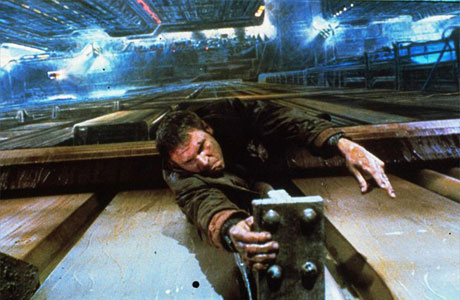
- Blade Runner (1982): I've watched this movie three times. Each time I want to like it, I want to see it the way so many others do: as a masterpiece of science fiction, an experimental film noir, a cerebral thriller. Alas, on three separate occasions, I have not. Yes, the set design is lovely. Yes, Harrison Ford does a terrific job. But why are we all so infatuated with this movie? Why do we insist upon labeling it a classic? Well, I think any film that spends as much time brooding as this one does, we tend to view as deep, or emotional. But is it? So our hero is troubled, does that make him more dimensional than any others? More frustratingly, the narrative is a convoluted mess. In terms of plot, it doesn't just twist and turn, but does nauseating loops. In terms of theme, it bounces between contrasting influences and ideas. Some movies pull this off admirably, all of David Lynch's films spring to mind, but the delivery here is so dull, the pacing practically static. This is my biggest complaint: Blade Runner is SO BORING. When character motivations are muddled, when the plot is dank and unknown, then the action ceases to be interesting. Maybe if I watched this movie another three times (or three-hundred times, for that matter) it would start to be enjoyable. For now, though? I'm done trying. Blade Runner can keep its pseudo-intellectualism and its down-trodden demeanor. I'd rather watch Star Wars any day of the week.     

- Breakfast at Tiffany's (1961): Breakfast at Tiffany's is widely regarded as a lovely little romantic comedy, one that examines love and friendship in a quirky, flirtatious way. To me, it's a bland film. The pacing is mild, the performances mediocre, and the writing is perfectly humdrum. The dialogue tries so hard to be sparkling and witty, but comes off cheap and unrealistic. Even the color palette, with its pale pinks and soft yellows, feels numb. Everything about this movie is lukewarm. Everything, that is, except the overwhelming racism dashed into the mix. For those of you who don't know, an Asian "character" is played by none other than Mickey Rooney, who milks the offensive stereotype for all it's worth. So, if mediocrity splashed with overt racism is what you're after, then look no further. This is a movie that has not aged well, but then again, it wasn't good from the start, so I guess I'm not surprised.   

- Gladiator (2000): "Are you not entertained?!" No, Mr. Crowe, I am not. I don't care how many weapons you swing. I don't care how many foes you defeat. This movie is a Roman chariot with a bum wheel - sure, it takes you from points A to B, but the ride is uncomfortable and inescapably slow. As our chiseled hero, Russel Crowe glowers through every scene, frowning as hard as he can, refusing to exude any range of human emotion. And you know what's most aggravating about it all? Crowe won an Oscar for "Best Actor" because of this. Not from A Beautiful Mind or The Insider (he's fantastic in both of these, by the way), but from Gladiator. It's really hard to comprehend. The only salvageable performance here is from Joaquin Phoenix as the slithery villain, Commodus. Unfortunately, this is the movie's only highlight. The rest of the film is typified by poorly staged action sequences, uninspired cinematography, and a gaggle of actors who all seem to be sleepwalking. If you're into historical epics, especially ones set in ancient Rome, then watch Spartacus - it's spectacular.         

- Heat (1995): Again, I'm baffled why so many people like Heat. It's about three hours long, full of terrible storylines (a few of which go nowhere), lacks a single likeable character, and has a cliched climax to boot. Hooray. To detail and describe each of its specific flaws would take pages, so I'll merely touch on a few of the miscalculations I find most amusing: -- 1.) After sitting through a lengthy montage in which our master thieves are planning an elaborate bank robbery, the actual heist ends with our criminal masterminds walking out the front door...in broad daylight...without masks of any kind. Is this supposed to be ironic? Tongue-in-cheek? I doubt it. The film takes itself too seriously to have a sense of humor. What a ridiculous moment. -- 2.) Apparently the L.A.P.D. is unaware of public safety, because many officers in this movie shoot endless rounds of ammunition from very big, very loud guns, in very public areas. I understand in movies you often have to suspend your disbelief, but seeing our hero detective (played by Al Pacino) sprinting down a busy city street shooting wildly at the bad guys is absurd. Keep in mind, this extensive shootout is cut with scenes of civilians fleeing for their lives. Does Detective Pacino see the innocent people he's endangering? Do any of the cops in this movie realize how reckless they're being? This is just awful. -- 3.) For whatever reason, the movie has an inane subplot about a serial killer who murders prostitutes. It serves no purpose (apart from a misguided sense of complexity), and gets even worse when a haphazard attempt is made to tie it to the main story. It's silly, superfluous, and just plain dumb. -- In no way whatsoever is this a great crime drama. If you want a new classic, go watch The Departed or The Usual Suspects or The Dark Knight. Save yourself three hours of aggravation and skip Heat. I mean it.         

- The Lady Eve (1941): This is a screwball romantic comedy from the 40s, so it's filled to the brim with goofiness. Regrettably, it's the goofiness that is this film's undoing. Random cases of mistaken identity hijack the plot, misunderstandings run rampant, and endless hijinks ensue. Due to the incessant calamity that is constantly underway, the movie is emotionally distant. It becomes impossible to engage anything on an emotional level because the humor is too over-the-top, the circumstances too outlandish. In the midst of all this nonsense is an excellent performance by Barbara Stanwyck, but unfortunately Henry Fonda is always there to spoil it. Too bad.   

- Solaris (1972): Solaris should have been my kind of movie. It's an intelligent sci-fi gem, heavy on atmosphere, saturated with stimulating concepts, and centered on a captivating main character. Here's my only real complaint about this classic movie: it is, without a doubt, one of the most boring films I've ever seen. It's dull, tedious, slow moving, and so on. An intellectual agenda is on display at all times, which means it feels more like a final exam than a movie. Each scene is a riddle, but they're unfortunately not very interesting riddles. While you struggle to decipher all the symbols and motifs, you'll notice the movie feels longer and longer. As an absorbing motion picture, I think it fails. As a cure for insomnia, it could be a monumental success.     

- Tron (1982): It's bright, shiny, colorful, technologically innovative, but totally lacking in heart. Herein lies the essence of Tron's failure. Not even Jeff Bridges, who is always awesome, could make it more than a vaguely amusing light show. It's a short film that feels hopelessly long. Perhaps this is because it's almost impossible to connect with the characters and situations, perhaps because beneath all those lovely colors is a shallow black emptiness. If you're intrigued by the premise, then watch the sequel Tron: Legacy instead. It is a far superior movie, one that better balances razzle-dazzle and emotionality. (As an added bonus, Legacy also has Jeff Bridges in a dual role! So righteous!)      

- The Untouchables (1987): If stripped of all the accolades and fanfare, The Untouchables would be a decent, albeit underwhelming, crime drama. The script is sparse but quick, the art direction is charming, and a few performances (notably those by Robert De Niro and Sean Connery) are quite entertaining. However, for all its critical acclaim and lasting influence, this movie is disappointingly sub-par. The film's director, Brian De Palma, is one big reason to blame. Scenes hustle by too quickly - the audience barely gets a chance to admire the scenery, or study the characters, or internalize the plot. Instead we're jostled hastily forward, skipping the artistry of it all and focusing solely on the bare bones at work. Yet, while De Palma glosses over the hard work of his crew, he dedicates focus and energy to celebrate himself. Directorial style can be a lovely thing when it harmonizes with the production, but in The Untouchables, the movie stops on a dime so our director can establish a not-so-subtle reference, or to inject some personal finesse that is ultimately unnecessary. It's jarring and counterproductive. But all of De Palma's stylistic hiccups pale in comparison to the film's primary problem: our central performance, played by Kevin Costner. This is a lifeless portrayal, one so wooden it practically blends in with the set decoration. Whenever a moment demands an authentic emotion, Costner stares blankly and speaks in monotone. It's laughable. Really. Even now, thinking about it makes me chuckle. I think the man is a pretty poor actor in general, but some movies can utilize Costner in agreeable ways (Man of Steel, for one). In The Untouchables, however, his inability to emote is in bloom. Watch and be astounded.   

- West Side Story (1961): Like a few of the movies on this list, West Side Story's biggest fault is all the awards and acclaim it won but didn't deserve. This is a completely functional motion picture. A few performances are nice, the set design is apt, the pacing is moderate, and the music is lovely. But to win 10 Academy Awards? To be so fondly and warmly received by critics? To be such an integral part of our pop culture? Hardly. This is a terribly forgettable film - one that epitomizes the phrase I employed earlier: "...overrated, over-appreciated, and over-celebrated." Folks, this is just not a very good movie. I'll admit, I'm not wild about the overriding choices at work here. Dancing as a substitute for gang violence and homicide? I'm sorry - call me cynical, call me narrow-minded, but I can't suspend my disbelief that much. The whole thing feels silly. It's unabashedly, fundamentally absurd. And wait, isn't this supposed to be a modernization of Romeo and Juliet? So why is the climax butchered? Why are so many of the film's basic components, like performances and choreography and dialogue, so excessive? I know it's a musical, but that doesn't mean it has to be so over the top. If you're seeking a good movie musical, I'd opt for Chicago, Little Shop of Horrors, or Singin' in the Rain. All of these movies are superb productions, and have a better grip on the mechanics and artistry required. But for West Side Story, it all feels fake. Something about it resonates flatly. My advice? Go see it on stage. In the theater, with a live orchestra playing and real people putting in an honest effort, it feels a little more alive.