Casual Reviews of Movies, Music, and Literature

Sunday, February 28, 2016

Headfirst Into A Hurricane - 10th Anniversary Analysis of Springsteen's "Lost in the Flood"

10 years ago today, one of my absolute favorite albums was released - Hammersmith Odeon London '75, a concert recorded by Bruce Springsteen and the E Street Band back in 1975. As far as live albums go, it's a real zinger. It was The Boss's first European tour, and it shows. There's a fiery intensity to each track, a crackling energy, like the band had something to prove. And they did. Preceding the event, Columbia Records reportedly flooded London with flyers, boldly proclaiming, "Finally London is ready for Bruce Springsteen and the E Street Band!" Pretty wild. Thankfully, they lived up to the hype. This is simply one of the greats, right up there with Sinatra at the Sands or The Beatles' rooftop concert. It's an engaging, passionate album.

One of the best...!
And although I love this record (it's easily my all-time favorite from Springsteen), there's one song I'm particularly enamored with. "Lost in the Flood," originally released on 73's Greetings from Asbury Park, N.J., is truly a soulful tune. It's the track that catapulted my lukewarm fondness for Springsteen to a full-on infatuation. The first time I heard it, I was walking home from school, volume blaring to drown out the traffic. I was immediately entranced. Springsteen's lyrics evoke undeniably strong emotions, drawing on topics like the Vietnam War, street violence, and spiritual disillusionment. Through breathtaking imagery, vivid characterization, strong symbolism, and ironic wordplay, he illustrates humanity's vulnerability to fate. If you're willing to read along, I'd like to explain it to you. This is "Lost in the Flood" how I see it, ten years after first listening. I hope you read and enjoy.

Okay, okay - to start, the song is split into three verses, each with its own story. The first focuses on a "ragamuffin gunner," presumably a returned soldier from Vietnam. It's a story about the character's skepticism of the church, and also a disturbing description of his time spent in war. The second verse is about "a pure American brother" who the song only refers to as "Jimmy the Saint." It's the romantic vision of a street racer's final drag. The third story describes gang warfare in the streets of New York City, showing both the futility and eerie glorification of violence. Each verse ends in the death of a character, illustrating humanity's defenselessness to fate.

As always, the imagery Springsteen employs is stunning, particularly in the second verse. Jimmy is a "blaze-and-noise boy" who dies a "highwayman's farewell" behind the wheel. His driving boils down to, "Gunnin' that bitch." Man, I love that. But the lyrics in the first verse are a tad more convoluted. Describing the ragamuffin gunner's past, comes the line, "His countryside's burnin' with wolfman fairies dressed in drag for homicide." Bizarre, right? Here's what I think: The wolfman is a traditional manifestation of the Jungian "Trickster" archetype, confusing and frightening. They appear as haunting fairies, wearing "drag for homicide," i.e. the army's olive drab, reminiscent of his horrific time in Vietnam. I think Gunner suffers post-traumatic stress, and in the song is suffering from a flashback, resulting in his death. Pretty neat, right? I also like the line, "The hit-and-run plead sanctuary, 'neath a holy stone they hide." This hints at Gunner's guilt. His Vietnam atrocities feel like a hit-and-run car accident, in which he never stopped to see the damage he caused. As for that holy stone...?

Bring on the religious disillusionment! There's a lot here, all serving the idea that fate, and not God, defines our destinies. While I don't know if I agree, I'm infatuated with the sentiment. By that logic, fate becomes the most powerful force in existence. Wild stuff. As far as irony goes, the religious rhetoric provides a nice juxtaposition between reality and fantasy - what is versus what should be. Example: Jimmy the Saint, our romantic small-town hero (think James Dean, Steve McQueen) is hardly a divine saint - just another person lost in the flood, surrendered to fate. How about "Bronx's best apostle" from the third verse? Just a kid with a gun. The "storefront incarnation of Maria" is possibly this song's Mary Magdalene, a hooker on 8th Avenue. Maybe she's an actual Mother Mary statue, a cheap trinket in a store window, dusty and irrelevant. My favorite? The nuns running through "Vatican halls pregnant, pleadin' immaculate conception." Last? "And everybody's wrecked on Main Street from drinking unholy blood." All this religious iconography is meaningless in the face of Springsteen's flood. Fate. The most powerful thing in the universe.

Which is, of course, our end point. The flood. Throughout the piece, the speaker wonders at the end of each verse why certain events transpired, but gives up every time and blames it on the flood, on fate. The first stanza: "Have you thrown your senses to the war, or did you lose them in the flood?" The second: "I wonder what he was thinking when he hit that storm, or was he just lost in the flood?" The third: "I wonder what they were gettin' into, or were they just lost in the flood?" Fate conquers all. The gospel according to Springsteen.

Lastly, there's the music. It's awesome, especially in this recording. The arrangement adds more to the theme, strengthening the message. The melody is a haunting one, complete with moaning guitar and a single organ note lasting the entire song. This adds despair, making fate seem even more powerful and everything else weaker in its way. The centerpiece is a beautiful piano, with the beginning and end reminiscent of a funeral hymn, solemn and melancholic. During the second verse (the tale of Jimmy the Saint), the rest of the band crashes in, mimicking the flood's crash over humanity. Even the line, "Everything stops, you hear five quick shots..." is immediately followed by a rapid fire of snare drum hits - the echo of gun shots in that tragic alley. The conclusion is ghastly - the chord structure devolves into chaotic clamor, with Springsteen wailing hopelessly, the metaphor reaching a hectic climax.

Because of the strong theme and incredibly inventive avenues explored to support it, "Lost in the Flood" by Springsteen is a masterwork. From war to warmth, from cars to crashes, from fate to fatality...this tune, and this particular live album, has it all. Getting lost in this song's subtleties and complexities is just as easy as getting lost in the flood itself.

Monday, February 15, 2016

Top 15 Films of 2015

Another year, another "best films" list. As usual, I tried to be as objective as possible, but keep in mind: I haven't seen every film released in 2015, and I'm sure there's still plenty of subjectivity here. Hope you read and enjoy! 

(*Honorable Mentions: Crimson PeakJurassic WorldKung FuryMission Impossible: Rogue Nation, The Visit

15.) The Revenant: What a great way to kick off this list. Although this revenge thriller is a tad over-bloated, its picturesque cinematography and masterclass acting make it worthwhile. There are a few truly wonderful moments here: terror, humor, and overwhelming catharsis.

14.) Inside Out: The visuals are dazzling, the characters adorable, and the premise ingenious. This is yet another classic spat out of the Disney/Pixar machinery, and it holds its own up there with The Incredibles and Toy Story. You'll laugh, you'll cry, but mostly you'll wonder when kids' movies became so dang smart.

13.) Goodnight Mommy: Yeah. I love horror. But Goodnight Mommy hardly feels like horror at all, at least not in the contemporary sense. Jump-scares? Over-the-top gore? A bloodthirsty villain? Nope, this one doesn't have any of that. Instead? Pure, unfiltered, absolute tension. Scenes ache by, pushing the horror as far as it can go, while still remaining strangely aloof, undersold. All the terror stems from one simple idea: What if your mother isn't really your mother? The answers are here, and they'll hit you deep down, where other chillers don't dare venture. Goodnight, indeed.

12.) The Hateful Eight: While I am a devout Tarantino fan, admittedly, I think The Hateful Eight is less captivating than some of his other films. However, based on craft alone, it still ranks as one of 2015's best. Our central characters are wonderfully performed (particularly Sam Jackson's keen bounty hunter and Jennifer Jason Leigh's feral prisoner), and I love how none of them are good people, like some kind of hyperviolent episode of Seinfeld. The music is larger than life (courtesy of the great Morricone), the imagery and direction are flawless (as usual), and the script is sharp as a knife to the throat.  Truly the work of a master craftsman.

11.) Bridge of Spies: Spielberg rarely makes a bad movie, and with this real-life Cold War thriller, he gives us a polished, aesthetically-nuanced film. Of course Tom Hanks is great, but thankfully so is the rest of cast, especially Mark Rylance and Amy Ryan. And the camera work? Fantastic. Shots are artsy and efficient, with lots of subtle oner's. Yet the feel of this production, how lived-in it is, how natural and understated, is its true success. Much like some of Spielberg's other historical epics - Saving Private Ryan, Munich, and War Horse spring to mind - this one is so flawlessly built that it hardly feels like history at all. It feels more like life. Thanks again, Steven.

10.) Black Mass: An ice-cold crime thriller, one whirring with wit and the macabre, Black Mass is easily one of the best films of 2015. Although there's a lot of awesomeness going on (all the 70's period costumes, quick dialogue, the whole Boston vibe), it's Johnny Depp's chilling portrayal of infamous gangster Whitey Bulger that steals the show. He is ruthless, strangely charming, and utterly mesmerizing. Much like the film itself.

9.) Creed: Here comes the cliche...are you ready? Creed is a knockout! ...but seriously, guys, it is. Tight script, loving cinematography (Philadelphia's never looked more vibrant), brilliant direction, and some of the year's best performances; especially Sly Stallone's glorious return to Rocky, one of cinema's most beloved characters. This is an electrifying finale to the story of Rocky Balboa, and a great introduction to boxing's new hero, Adonis Creed. It's the best sports movie of the year, and will hopefully give rise to a slew of entertaining sequels. Here's to six more!

8.) Mad Max: Fury Road: Is this the best action film of the year? No. The best sci-fi? I don't think so either. But there's something special here, something hard to put your finger on, that makes Fury Road undeniably cool. People like to prattle on about how great the practical effects are (and yeah - they are), or how Charlize Theron totally kills it in the lead role (which she does), but in the end, this movie doesn't feel dissectible. Breaking it down into smaller pieces seems unnecessary. Just watch the damn thing. It's great.

7.) It Follows: The concept is simple, the characters are relatable, the scenery (present-day Detroit) is beautiful, and the horror is vicious. The less I reveal about this one, the better. I suggest you go in with as little prior knowledge as possible. Just know that It can represent many things (mortality, intimacy, HIV/AIDS) and will scare the bejesus out of you. So turn off the lights, wait until the rest of the house is fast asleep, and enjoy. The tagline is, "It doesn't think, It doesn't feel, It doesn't give up." How great is that?

6.) Ex Machina: With its deliberate, meditative pace, lots of people found this sci-fi thriller to be "boring." How sad. Ex Machina is one of 2015's best, and it earns a spot in my top ten for lots of reasons. Much like Sicario and Goodnight Mommy, the focus here is on a triangle of characters: an unpredictable genius, an everyday schmo in over his head, and a futuristic cyborg learning how she fits into the world. The cunning cat-and-mouse interplay between them is a real thrill, and if you're able to sink your teeth into the ideas at hand, you'll be very happy with the payoff.

5.) Straight Outta Compton: Coming in at #5 with a bullet (with lots of them, actually) is this engrossing biopic about infamous hip-hop group N.W.A. Although the technical specs are all rock solid - the cinematography, the editing, the sound design - it all boils down to two things: Up first are the performances, all of which are terrific (it's a shame that newcomers Jason Mitchell or Corey Hawkins weren't nominated for Oscars). But second, and perhaps most important of all, is the dynamite directing by F. Gary Gray. He manages to juggle several subplots, a cast of hundreds, and an overall runtime of almost 2 and a half hours, without losing a single beat of forward momentum. It's a feat of pure virtuosity.

4.) The Martian: Lord knows I'm not the biggest fan of director Ridley Scott (apart from Alien, I find most of his filmography completely overrated), but with The Martian he hits it right out of the park. This story of stranded astronaut Mark Watney attempting to survive alone on Mars is one of the year's most entertaining, engaging films. A lot of it hinges on star Matt Damon's charisma, so thank God he's got enough to go around. The other performances are great (particularly from Chiwetal Ejiofor and Jessica Chastain), and so too is the script and special effects. This is a hilarious, and occasionally breathless, film. A great feat for Ridley Scott, and a welcome addition to the cinema of 2015.

3.) Sicario: Wow. What a visceral, vicious film this is. Focusing on America's war on Mexican drug cartels, Sicario is bold and unapologetic. Our three leads (Emily Blunt, Benicio del Toro, and Josh Brolin) give us some of the year's best performances, particularly del Toro as a mysterious, lurking shadow. Within minutes of the opening shot, a palpable danger seeps out from the screen. I found myself sweating and squirming through the whole thing. If you want an uncompromising, tooth-and-nail thriller, then this is it.

2.) STAR WARS (Episode VII): The Force Awakens: Although I'll probably write a full review later (as an avid Star Wars fan, I need to let this one settle in before jumping to any ridiculous conclusions), my gut reaction for this thing? Pure joy. The Force Awakens truly is an awakening - for the series, for sci-fi, and for pop cinema. As a spastic fan boy, I loved seeing the returning characters (particularly the eternal Han Solo and my main man Admiral Ackbar), but it's the new characters that make it great: determined Rey, heroic Finn, sardonic Poe, adorable BB-8, and our newest favorite villain, the petulant Kylo Ren. The way these characters are written, how they're performed, is an absolute treat. They remind us that the heart and soul of the Star Wars saga is humanity. Everything else - the wonderful writing, grand cinematography, organic special effects, brisk pace, gorgeous art direction, incredible music - simply icing on the cake.

Director JJ Abrams really lived up to the hype, and God bless him for it. Although in many ways The Force Awakens is a retelling of the 1977 original, it's so imbued with charisma and wit that no one really cares. Regardless of the familiarity, regardless of studio calculation (there are plenty of beats here that are too on-the-nose), this is nonetheless meteoric entertainment. While it's not the best film of 2015, this might be the best movie - all fun and flashing light. How marvelous.

1.) Spotlight: Very much in the tradition of All the President's Men and The Insider, Spotlight is a searing journalistic drama. Hard-nosed and haunting, effective and affective, this is unquestionably the best film of 2015. It's a period piece, of sorts (it's hard to think of 2001 as being a "past" setting, but whatever), with everything from characters to plot fitting perfectly inside that niche. Makes sense, because this is a true story. Unfortunately.

The plot revolves around a group of journalists from the Boston Globe investigating the systematic cover-up of sexual abuse by priests within the Catholic church. So yeah, this is more than a movie about newspapers. It's a battle of souls, an elegy of lost innocence. Pretty rough subject matter, but thankfully the film doesn't sugarcoat. There's an unrelenting ugliness here, something evil and deformed. But that's fine. It's supposed to be, right? A movie about pedophilia shouldn't be pretty. It is what it is: horrific.

Yet where there's darkness, often there's light. A spotlight, actually. To show the way, to give us hope, to bring clarity. This movie deals in clarity - of ideas, of emotions, of fact and fiction. This is mostly due to the script, the dialogue and plot points imbued with a sense of ponderous reality. And it's brought to life, for better and for worse, by an incredible cast: Michael Keaton, Mark Ruffalo, Rachel McAdams, Liev Schreiber, Stanley Tucci, my boy John Slattery, and a dozen others. Each performance is standout, playing to each actor's particular strength (Keaton's underplayed realism, Ruffalo's ingrained humility, McAdams' pronounced focus). The direction and cinematography are equally strong, to a degree that both become invisible. No ostentatious camera tricks or directorial flourishes here. Just no-nonsense control.

This is an honest and heartbreaking film, one that dared to peer into the dark and shine a light. It's far from a happy story, but thanks to the bulletproof production and dynamite cast, it's a riveting one. Certainly the very best of 2015.

Wednesday, December 23, 2015

Top 10 Albums of 2015

Here they are, ladies and gentlemen: the ten best albums of 2015, as I hear them. I run the gambit on this list, from pop to jazz to classical. Read, listen, and enjoy!

(*5 Honorable Mentions: California Nights by Best Coast, No One Ever Tells You by Seth MacFarlane, Water Walker by Folk Family Revival, You Were Never Alone by Emery, 2.0 by Big Data)


10.) Good Girl by Julian Moon: Equal parts pop and sarcasm, Good Girl is a dreamy yet biting record. It's honest, funny, and incredibly catchy (and "A Cup of Coffee" is one of the year's best songs...seriously).
9.) The Epic by Kamasi Washington: Although this record is far longer than it needs to be (a whopping 2 hours 53 minutes!), this is nonetheless a fine work of jazz. It lives and breathes, swelling with soul and alive with unusual composition.

8.) My Favorite Things by Joey Alexander: Somehow, one of the decade's best jazz albums burst forth from the imagination and ability of a 12-year-old. Joey Alexander is a musical prodigy, and on My Favorite Things he shows off his impressive, eclectic, and incredible skills.

7.) What A Terrible World, What A Beautiful World by The Decemberists: This is familiar territory, but it's never seemed fresher. Here, The Decemberists craft a bubbly album, one with introspective lyrics and tight arrangements.

6.) Higher Truth by Chris Cornell: An album of unbelievable warmth, creative melodies, and astonishing musicianship. Cornell's voice is timeless, and so is this record.

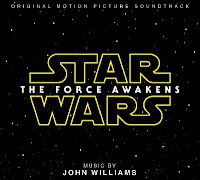
5.) Star Wars: The Force Awakens (Original Motion Picture Soundtrack) by John Williams: Orchestral music is certainly out of the pop culture these days, but with this soundtrack, Williams again proves how wrong we all are. Apart from the standard Star Wars fare (beautiful in its own right), there are some stunning new compositions, notably the heartbreaking "The Scavenger" and the haunting "Snoke."

4.) Invisible Stars: The Choral Works of Ireland & Scotland by the UCD Choral Scholars & Desmond Earley: Again, classical songwriting can be some of the most expressive, most engaging music available. Here, we have a collection of choral pieces from Ireland and Scotland, and they are utterly captivating.

3.) 1989 by Ryan Adams: In all honesty, I listened to this album thinking I was going to hate it. I'm not infatuated with Adams or Taylor Swift, and thought this record was going to be a hokey, pretentious musical experiment. And while there are a few moments of faux avant-garde nonsense, this is nonetheless a fabulous recording. Adams' quaint vocals pair beautifully with arrangements ranging from downbeat folk to bouncy pseudo-funk. This is an undeniably cool, interesting album.

2.) The Weather Below by Sister Sparrow and the Dirty Birds: Holy crap, this album is up my ally. This is a mammoth throwback to the hits of yesteryear - phenomenal funk, sensual soul, unending awesomeness. Sister Sparrow herself is a bit like Joss Stone, but without all the pretentious political posturing. The overall sound quality is textured and organic, like what you might hear on an Avett Brothers or Mumford album (which makes sense. Producer Ryan Hadlock is known for working with The Lumineers). I love the way it shuffles past your ears; bounces in your brain. Highlights include the searing "Borderlines" and the bubbly "Sugar." 

1.) Besides by Pomplamoose: If there's such a thing as post-postmodern music (maybe altermodern?), then Besides by Pomplamoose is the quintessential example. This album is a hybrid of original material, covers, mash-ups, and everything in between. It simultaneously explores music of the past with that of the present, blending familiar hooks and melodies with quirky, borderline surreal chord structures and arrangements. Miraculously, this is a record free of pretension, thanks in part to its modest production and small scale. But there's nothing small about the musical innovation and freshness of Besides.

Sunday, December 13, 2015

STAR WARS (Episode VI): Return of the Jedi - Review

Wow...what a nostalgic journey this has been, eh? Pouring over these 6 Star Wars films has been immense fun, and really taken me back to the old days. The digitized nonsense of the prequel trilogy - Phantom with its stupid story, Clones with its atrocious acting, and the relative resplendence of Sith - was a huge part of my childhood. (So too was discovering that they're all sub-par.) But the original trilogy? My cinematic compass. A New Hope taught me the importance of imagination, showing me fantastic creatures and outrageous settings. The Empire Strikes Back proved that pulpy sci-fi didn't have to appeal to everyone, that it could be dark and introspective. And the final entry in the series, Return of the Jedi? What did that teach me?

Let's save that until the end. For now, I'd like to simply give you my impressions, and tell you my personal experience with Episode VI. Let's dig in...

Our heroes embark on a final mission...
My sharpest memories of the original trilogy all revolve around Jedi. As a 7-year-old, I recall sitting in the theater seeing it for the first time, squirming and squealing at all the right moments (I hated Jabba the Hutt, cried when Yoda faded away in the dark, and cheered when Vader decided to save his dying son). The following weekend, I attended a friend's birthday party, and we all went to see it again. The novelty retained its freshness. I played the Super Nintendo game (Super RETURN OF THE JEDI) until my fingers were numb and my eyesight blurred. I talked for hours with my neighbor down the street: Why did Jabba want to keep Han so badly? How come the Emperor's face is all screwed up? After the Death Star is destroyed and the galaxy finally set free, what happens next?

Yeah, as maybe you can tell, Return of the Jedi was my favorite Star Wars film, my gold standard for years. Why wouldn't it be? It somehow managed to exceed Hope in terms of action and spectacle, yet still explored character motivations and themes like Empire. As a kid, I was in awe of this movie. I laughed at Han, cheered for Lando, was nervous for Luke, and fell in love with Leia. It was everything I wanted and more.

Gotta love the Emperor. Gotta.
But as the years zipped by, I grew tired of it. In my high school days, when it seemed like every blockbuster was suddenly serious and somber (from Batman Begins to Casino Royale), I became less interested in Jedi. Jabba and his desert palace seemed so silly; the Ewoks and their cuddly last stand so stupid. Even the great Han Solo, with his unending quips and cartoonish faces, annoyed me. Why wasn't this film as brooding as its predecessor? Although I always loved the scenes on the Death Star, in which Luke squares off against ultimate evil, I grew to hate the rest. Even in college, when a resurgence of Star Wars love settled into my bones, I never again warmed to Jedi. It was the flagship of my childhood, the royal sail barge of my former obsession, and could never again be anything else. It was the Back to the Future Part III, even the Godfather Part III of the original trilogy. I tolerated it. That was all.

And then a funny thing happened. Somehow the smoke cleared, and I was able to rewatch Return of the Jedi with an ounce of objectivity. And you know what? It's terrific. Really, truly terrific. As a twenty-six year-old adult, I have somehow come full circle. While it's not my favorite entry in the series (that honor still rests comfortably with A New Hope), I can nonetheless say that Jedi is far from disappointing. It is excellent.

On the surface of everything, it has incredible special effects, production design, and sound. Even with all its craziness, you buy into Jabba's palace because of its detail and authenticity: the way dust settles across the ground, how the various aliens move and bustle and breathe. The scream and squelch of lightsaber combat has never been more dramatic - the blades cackle, sizzle, slide. And the space battle? Great. While it lacks intimacy, it excels at pure pop fun.

Hands down, my favorite duel in the entire saga.
Beneath all that, the film has its best quality: the final curve of each character's story arc. Han is now a loving, albeit rough-around-the-edges general of the rebel alliance. Leia is the definition of confidence, free from sardonic quips, finally ready for love. Luke becomes a Jedi, overcoming his fear and anger and doubt, to become a guardian of peace and justice that Ben Kenobi once spoke of. And Vader? He ceases to exist, instead becoming what Luke hoped for all along - a good man, one who sees through the cloudy dark side and crawls back to the light. Luke doesn't just herald the return of the Jedi, but Anakin returns to being a Jedi. For these reasons alone, the argument can be made that this is the best episode overall. The characters no longer seem like characters at all. They're real. Jedi taught me this: when it comes to storytelling, characters should always come first.

And what about those Ewoks? They seem to be everyone's major complaint. It's George Lucas giving in to his greed, right? Thrusting those adorable little teddy bears center stage so he can sell toys and market to the kiddies? Well, I don't see things that cynically. For me, Ewoks represent the ultimate rebellion against the Empire - a seemingly harmless, oafish band of ragtag warriors who stand together and fight. They throw rocks, roll logs, and hurl spears at the technologically superior stormtroopers, and somehow do enough damage for the trained rebels to get things done. From an autobiographical standpoint, I can't help but think they're symbolic of George Lucas's artistic struggle against big studios. He wanted freedom from oppressive cinematic standards, and armed with only a slingshot and unending bravery, persevered against an empire of big money. I like that.

Return of the Jedi is yet another terrific Star Wars film. Its grand operatic razzle-dazzle pairs perfectly with climactic characterization. At times campy, at times silly, it nonetheless ends the trilogy on a very, very high note. While this movie perfectly completes the series, rounding out our characters and tying up every loose end, it still leaves us aching for more. I simply can't wait. Final Grade: B+

Sunday, December 6, 2015

STAR WARS (Episode V): The Empire Strikes Back - Review

Like its predecessor, The Empire Strikes Back is one of the greatest movies of all time. It's a sci-fi epic, one that ventures past the shallow waters of typical blockbuster filmmaking and into deeper, murkier territory. Although it initially garnered lukewarm reviews, many fans and critics now cite this episode as the best in the entire saga. Understandably so. It's a dark film, daring to plumb the depths of its characters' minds and souls. Action sequences share time with intensive characterization, and the pace is slower, almost meditative. It's eerily hypnotic. As an adult, I adore Empire. It's a grim, but fitting, middle chapter.

As a kid, though? Not so much. In elementary school (before the prequel trilogy, mind you), everybody either loved Hope or Jedi. I felt the same way. Those movies were action-packed roller coasters, with lots of cheeky humor and optimistic moments. But Empire? The black sheep. I remember seeing it in theaters and experiencing all kinds of emotions I wasn't used to feeling as a child. Mostly fear. To me, this movie was truly scary. The wampa snow monster, with its jagged teeth and white fur matted with blood, was an absolute nightmare. So too were the flying parasites inside the asteroid, which squeaked and squealed in hideous tones. Worst of all, though? I hated the pivotal lightsaber battle between Luke and Vader. Strangling tension, punctuated by a particularly brutal jump-scare? No thanks. I couldn't handle any of it.
...the Empire literally standing between their friendship. Love it.

Even worse? There was a lot I didn't comprehend. My 7-year-old brain just couldn't handle it. Luke's trippy encounter in the cave, ripe with symbolism and surreal visuals, was an absolute mystery. What was going on? I was equally confused by the character of Lando. Why would somebody do that? I wondered. Isn't he their friend? My mind whirred, and all the while I hated the character more and more.

Sure, there were things I liked. Yoda, for one - I became obsessed with that little guy. I also loved Cloud City, the look and feel of it. I even enjoyed the deepening mystery of Darth Vader, with that quick glimpse beneath the helmet and the implications of his once-glorious past. But like Vader himself, the bad outweighed the good. Internally, I bounced between surprising fear and irritating confusion. Not exactly the recipe for a kid-friendly adventure flick.

Luke's training scenes are some of the saga's finest.
But I warmed to Empire. As I grew older and experienced more, it became essential. I remember sitting in my 9th grade health class, talking to my friend Bill about Star Wars. He said his favorite installment was Empire because "it's got balls and brains." In that moment, I decided he was right. When he asked what mine was, I too said Empire. And just like that, Return of the Jedi was dethroned (permanently) and I had a new number one. It remained my favorite for years. The more I rewatched it, the deeper I fell under its spell. I became infatuated with certain moments and characters: The opening Hoth scenes are beautifully staged and photographed, from the frigid exteriors to the gloomy interiors. Lando, with his sleazy swagger yet assertive leadership, is a fantastic foil. Han and Leia's love story is funny and deeply moving. Best of all? Luke's training on Dagobah, and his subsequent lightsaber duel with Vader. All these varied pieces fit together with mechanistic precision. Everything works beautifully.

Fantastic love story.
Even the gloomy mood works. The buoyancy of A New Hope is wiped away, and we're treated to the darker side of a galaxy far, far away. There's in-fighting, betrayal, jealousy, and a whole lot of insecurity. The production design mirrors this emotional shift - everything is dingy, foggy, on the verge of collapse. Even Cloud City, with its pearly facade, seems dangerous. What's going on below the surface? What threats lurk just out of sight? John Williams' score is equally menacing. The infamous "Imperial March" establishes the film's first act, with "The Clash of Lightsabers," a truly haunting piece, near the end. The only real musical stability provided, the placid "Yoda's Theme," nonetheless aches with sadness.

Heartache? Confusion? Anger? The Empire Strikes Back is a dusky tapestry of negative emotion. It's also a cinematic contradiction: thrilling yet thoughtful, expansive yet intimate, frustrating yet fun. As a kid I couldn't handle everything it threw at me, but now I understand. Empire is an incredible film, heavy on atmosphere and thematically versatile. It is perfect. Final Grade: A+

Sunday, November 29, 2015

STAR WARS (Episode IV): A New Hope - Review

Woah, this is going to be tough. What's left to be said about the original Star Wars? It's one of the best films of all time and arguably the best science-fiction flick ever made. It's action-packed, filled with engaging characters and fascinating concepts, and is one of the highest grossing blockbusters worldwide. Simply put: it's classic.

So...what can I say about it? Nothing terribly new. I won't go into detail about the plot (which is perfectly simplistic), or describe its many characters (some of the best ever put to film). But I will tell you about my experience with A New Hope. This is my personal journey to a galaxy far, far away. I sincerely hope you read and enjoy....

I first saw Star Wars (Episode IV): A New Hope in 1997. I was seven years old, and my parents took me to see the twentieth anniversary "Special Edition" in theaters. I don't have any specific memory of this (not the squeak of theater seats or the flavor of popcorn, not even the hum of a lightsaber in all its surround-sound glory), but I do remember leaving the theater, walking out into the lobby as the end credits scrolled. There was a feeling in my chest, something electric and slippery. It was the way I felt going to the county fair, like being at the top of the Ferris wheel. Although I couldn't express this feeling at the time, I can now.
Guinness as Kenobi - one of cinema's best performances.

It was excitement. Total, absolute, unwavering, Christmas-morning excitement. A movie had never made me feel that way before. As we walked to the parking lot, my brain buzzed. Wasn't it awesome when Obi-Wan cut that alien's arm off? Wouldn't you want to have a droid like R2? Wasn't it great the way Han came back at the end? Aren't lightsabers amazing? I hopped from one foot to the other, words hurrying from my mouth in a frantic slur. For my family, I'm sure the car ride home was nauseating. "Uh-huh," they might have said. "Yup, it really was something."

And to me, it really was something. Seeing A New Hope opened my eyes to what movies could be. It was a portal to another universe, one I'd never dreamed of, or even thought of dreaming. Like most kids who see it at that perfect age, Star Wars became my obsession. I owned the toys, played the video games, filled notebooks with drawings of my favorite scenes, ran around the playground as an X-Wing pilot who dared to follow Luke into battle against the Empire. My closest friends quickly became other kids who shared my obsession. We'd talk for hours about moments, characters, scenes. As a seven-year-old, it was life. My parents soon took me to see the other two chapters of the original trilogy, and although I immediately identified Return of the Jedi as my favorite (I was seven, after all), A New Hope is what started it all, the catalyst of my childhood fervor. It's the reason I'm here, as a twenty-six year-old, writing about it.
Love this character, this moment, and this film.

But I'm getting ahead of myself. As I grew older and my tastes changed, my love of a galaxy far, far away remained. And while I quickly realized the prequels sucked, I learned other things too. I realized Return of the Jedi with its hokey ewoks wasn't my favorite. And The Empire Strikes Back with all its brooding atmospherics wasn't my cup of tea either. Don't get me wrong, I went through phases where each installment of the trilogy was my gold standard, but I kept going back and back to A New Hope. I remember being a high school sophomore, sitting in the cafeteria and talking about the recently-released Revenge of the Sith. Inevitably, we ended up debating which episode was best, and I was the only one who chose Hope. "It doesn't have all the campy fun of Jedi," someone said. "It's not serious like Empire," said another. And I couldn't argue with them. I just shrugged and said, "Yeah - I know. But Hope has everything."

And thankfully, it does. This is a movie I've seen dozens of times, and every time it works. As a seven-year-old, I loved the action and visuals. As a preteen, I identified with the characters (I wanted to be Han Solo, but saw more of myself in Luke). As a teen, when I really started getting into cinema, I loved analyzing the interlocking pieces - John Williams' iconic score, Ben Burtt's incredible sound effects, Alec Guinness's nuanced portrayal of Obi-Wan Kenobi. As a college student, I adored its longevity: how Han still made me laugh, or Vader still made me cringe.
Best villain ever?

And now? I still admire it for all those things, but there's still so much more. I love seeing its similarities to other films: The opening scroll is reminiscent of serials from the 1930's (like Flash Gordon); moments and characters are pulled straight from samurai classics (notably Kurosawa's The Hidden Kingdom and Yojimbo); you see John Wayne's sorrow from The Searchers written on Luke's face upon finding his home destroyed and family murdered; and there are countless nods to other sci-fi epics (1927's Metropolis and 1968's 2001: A Space Odyssey). I love its adherence to classical storytelling, following the hero's quest almost as well as Homer's Odyssey. I love that I can show it to a classroom full of seventh graders to study plot, theme, and characterization. I love that I can watch it for the millionth time and it still feels fresh. Regardless of all the "special edition" changes or bizarre alterations, it is nonetheless essential viewing. When all is said and done, it is pure imagination.

But most of all? I love A New Hope because it truly is what its name suggests. It is hope: for film, for fun, and for the future. Final Grade: A+

Sunday, November 22, 2015

STAR WARS (Episode III): Revenge of the Sith - Review


...is it time? Really? Have we finally arrived at a Star Wars movie that's decent? Heck, not just decent, but surprisingly good? YES! I think we have! So crack open a carton of blue milk, buy yourself a pack of death sticks, and settle in for a review that's not overwhelmingly negative! Hooray!

But hold up a sec - am I saying Revenge of the Sith is perfect? Unfortunately no. Far from it, actually. In pure prequel fashion, there's still a bantha-load of issues present from the opening scroll to the final shot. But why start there? Let's keep things positive. After all - this one isn't terrible!

The Good: 
I actually like Grievous. Deal with it. 
- Many of the good qualities from Phantom and Clones are ramped up even further. The action is crazier, the villains meaner, heroes more dashing, the sets are bigger, the music more dynamic, and the stakes have never been higher. Things go way over-the-top, but after two movies that refuse to do much of anything, this is a refreshing change of pace.
- The cinematography is pretty decent. For the first time in decades, Lucas seems comfortable behind the camera, and it shows. Shots move gracefully, often propelling the action and controlling the pace. And there's depth, real depth, where images extend forever into the background. Love it.
- Across the board, the acting is much better. Christensen and Portman finally find some chemistry, McGregor is playful and nonchalant, and Ian McDiarmid is magnetic as the evil Darth Sidious.
This scene is one of the best in the entire series.
- The story has improved, teeming with relevant subplots and character development. Thank goodness. Although they ain't perfect, motivations and actions feel fairly realistic. Anakin's downfall, while a little rushed, works pretty well. Which means...
- It's thematically rich. I'm not saying it's Schindler's List or anything, but as far as summer blockbusters go, there are some ideas here worth chewing on.
- It's jammed full of iconic moments... Kenobi exploding out of a crash-landed star ship. Anakin's face when he hears about the pregnancy. Reptilian eyes leer out from droid armor. Two lovers, separated by an opaque cityscape, look to each other without seeing. A power-hungry hero succumbs to evil, dropping to his knees. An army of Jedi are murdered. Two brothers fight to the death, lightsabers clashing as lava sprays all around. Vader's helmet goes on, and his first electronic breath wheezes out. It's awesome.
- Unbelievably, Revenge of the Sith actually feels like a Star Wars movie! This one's hard to explain, but it's true. Something about the pace, the characters, the swashbuckling swagger of everything, makes it feel like a logical extension of the original trilogy. Wow.

But it isn't perfect. For example...

The Bad: 
- There are still way too many CG effects. But honestly, I can't really complain about this. Unlike the other entries in the prequel trilogy, Sith's effects are almost perfectly rendered. So...yeah. I guess this isn't really a negative. Oh well.
- Some of the dialogue is hilariously overwritten. Watch it - you'll understand.
Quit talking and DO SOMETHING!
- Characters act like characters, and not real people. Case in point? Anakin discovering the true identity of the Sith. When he realizes the terrible plot that's unfolded, when the secret antagonist reveals himself, what does Anakin do? Try to solve the problem himself? No. Maybe he runs quickly to his Jedi masters for help? Nope. Instead he leisurely walks from points A to B, and in business-like tonalities, states the problem to Mace Windu. And then? Mace frowns, calmly asks more questions, and then finally after endless deliberation, decides to act. Why does all this happen so slowly? Why isn't anyone the least bit concerned about this horrifying revelation? This isn't how real people would've acted. Not even remotely.
- An ending that's supposed to be tragic is kinda funny. Yeah, we're all aware the infamous Vader, "NO!!!!!" is hilarious, but I'm talking about the rationale we were given for a certain protagonist's death in the last few minutes of the film. I don't want to spoil it, but for those who don't know, a main character dies because s/he "...has lost the will to live." Yup - a character dies of a broken heart. Even worse? The scene is set in a futuristic hospital, with all kinds of high-tech gadgets bleeping and blooping all around. None of those machines could save the character? Not one? This is utter nonsense.

While it's not perfect, Revenge of the Sith is tremendous entertainment. It's the best space opera of the 00s, loaded with sensational visuals and over-the-top action. Many people consider this film to be the "darkest" of the series, and while I agree with this judgement, "darkness" doesn't mean greatness. Sith finds its greatness by fitting into the big picture. Unlike Phantom and Clones, it feels necessary. It's the prequel I always wanted, and the one I find myself going back to time and again. Final Grade: B